SaaS Backlinks: What Drives Rankings in 2026
A practical SaaS SEO guide to backlinks in 2026: what link signals matter, what to avoid, and how to build a profile that improves rankings and discovery.

by Mohd Anas
• 21 min read

Key takeaways
- Backlinks still matter in 2026, but relevance and context beat raw volume.
- SaaS teams should build links to high-intent pages, not only blog posts.
- Curated directories and launch platforms can support both SEO and discoverability.
If you are a SaaS founder, marketer, or indie maker, you already know the frustrating part of SEO: you can publish solid content, improve your site, and still struggle to rank because your market is crowded with better-known competitors.
That is exactly where SaaS backlinks still matter.
Not in the outdated “get as many links as possible” way, but in the modern sense: earning relevant, trusted mentions that strengthen your product pages, comparison pages, launch pages, and core commercial content. In 2026, backlinks are not the whole ranking system, but they are still one of the clearest signals that your software deserves visibility.
For SaaS brands, the real question is no longer do backlinks matter? It is which backlinks actually move rankings, visibility, and signups?
This guide breaks that down clearly: what makes a backlink valuable for SaaS, which link patterns are worth your time, what founders should ignore, and how platforms like MarketingDB can help you earn discoverability, indexed visibility, community traction, and targeted traffic without turning launch season into a full-time outreach job.
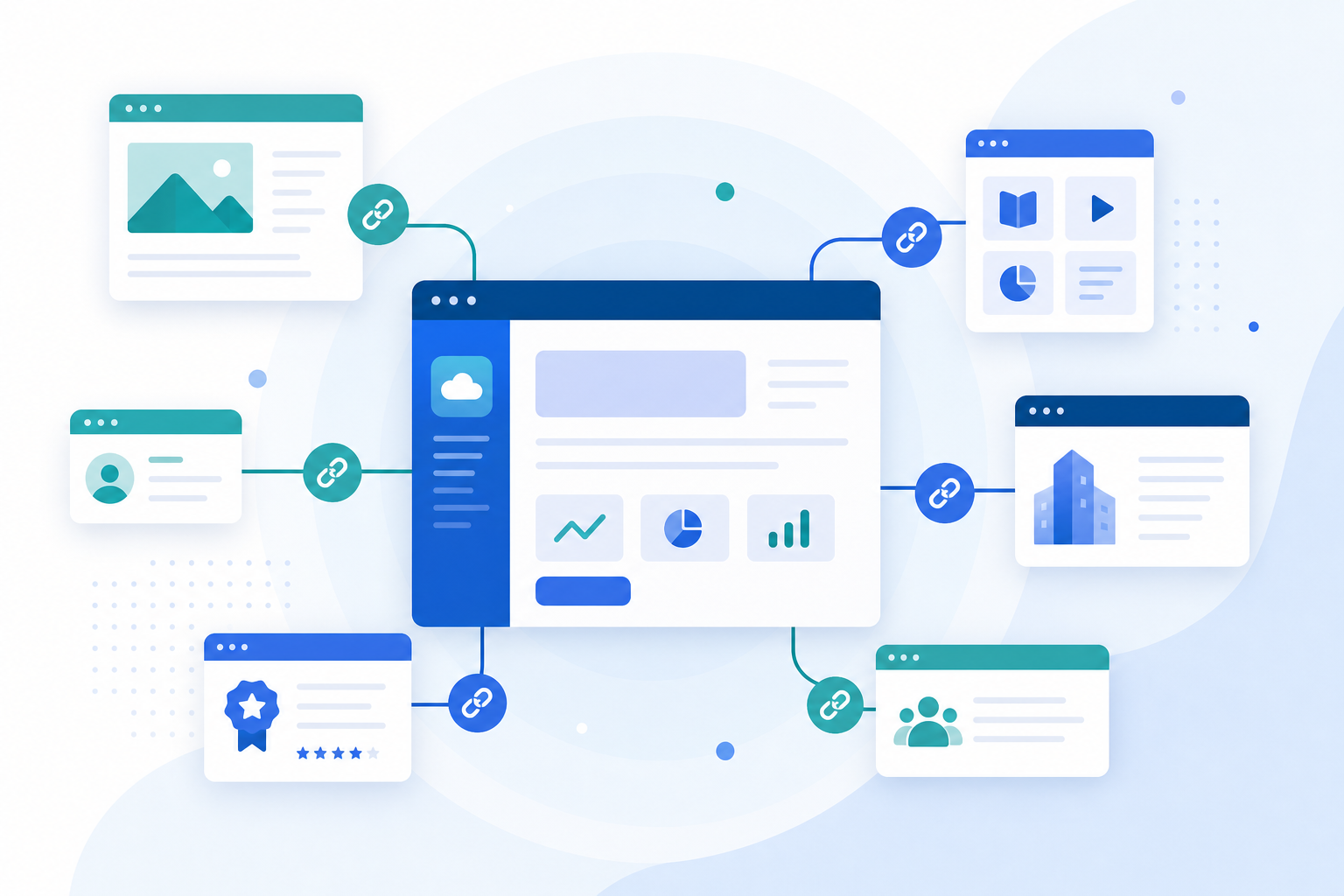
Why SaaS backlinks still matter in 2026
SaaS SEO is unusually competitive because the keywords are commercially valuable and the buying journey is long.
A local business may need to rank for a handful of regional terms. A SaaS company often needs to rank for:
category keywords
comparison searches
alternative pages
feature-led searches
integration searches
template or use-case queries
branded discovery across review and launch platforms
When multiple companies publish similarly strong content, backlinks often become the deciding trust signal.
"The #1 position in Google has, on average, 3.8 times more backlinks than positions #2 through #10." - Source
That does not mean every link works equally. It means authoritative, relevant links still help Google decide who deserves the top spots.
For SaaS specifically, backlinks do more than influence rankings:
they validate your brand in a crowded category
they send qualified referral traffic from relevant audiences
they strengthen money pages, not just blog posts
they increase the chance your product is surfaced in AI-assisted discovery environments
they help new pages get crawled and indexed faster
And that last point matters more than many founders realize. A clean discovery platform with strong internal structure, updated sitemaps, and crawlable listings can help your product pages get found faster. That is one reason curated launch and directory platforms remain useful, especially when they pair indexed listings with targeted visibility.
What the top-ranking content gets right, and what it misses
Most competitor articles on SaaS backlinks agree on a few big ideas:
quality matters more than raw quantity
relevance beats inflated domain metrics
product and comparison pages need links too
spammy link schemes are risky
original data, tools, and partnerships can earn durable links
Those are all directionally correct.
But a lot of that content misses several practical realities founders care about:
1. Not all useful backlinks need to come from big media sites
Many SaaS teams assume “real” backlinks only come from major publications. In reality, niche directories, launch platforms, partner ecosystems, software communities, and curated product hubs can be highly valuable when they are relevant, crawlable, maintained, and actually used by the right audience.
2. Discovery and backlinks are often treated as separate goals
They should not be. A strong SaaS backlink source should ideally do both:
improve SEO value
put your product in front of actual buyers, founders, makers, or tech audiences
That is where launch platforms like MarketingDB become strategically interesting. You are not just dropping a link into a database. You are adding your product to a curated environment where people browse tools, vote, comment, and discover new products.
3. Competitors underplay the role of product launches and directory systems
For early-stage SaaS, the fastest path to link diversity is not always a massive content engine. Often it is a combination of:
launch listings
product directories
niche communities
integration mentions
founder profiles
review ecosystems
partner roundups
4. Few articles explain what founders should do first
A lot of advice assumes an established marketing team. Most startup teams need a priority order, not just a tactics list.
This guide focuses on that practical layer.
What makes a SaaS backlink valuable
A backlink is valuable when it improves trust, relevance, discoverability, or traffic in a way that compounds over time.
Here are the five signals that matter most.
Topical relevance
A backlink from a site that regularly covers SaaS, startups, martech, product, growth, or your vertical is generally more useful than a stronger-looking link from a random general site.
For example:
a project management SaaS getting mentioned on an ops or productivity blog
a developer tool being listed on a product platform used by builders
a marketing SaaS appearing in a curated software database
These contextual relationships matter.
Page-level intent
Links to your homepage are fine. But for SaaS, many of the best links point to:
product pages
comparison pages
feature pages
integration pages
launch pages
category listings
Why? Because these pages align more closely with buying intent.
A link to a high-intent page can influence rankings and drive traffic from people already evaluating solutions.
Editorial credibility
The best SaaS backlinks feel natural in context. They are placed because your product genuinely belongs there.
That could include:
a mention in a tools roundup
a directory listing in a curated product category
a partner mention on an integration page
a launch page on a discovery platform
a citation from an original research piece
a reference inside a real editorial article
Crawlability and indexation
A backlink only helps if search engines can find and process it.
That sounds obvious, but many “links” live on low-quality pages that are barely indexed, poorly structured, or buried in broken site architecture.
This is one reason a clean, organized product platform matters. MarketingDB’s builder-friendly directory structure, launch pages, and sitemaps make listings easier for search engines to crawl, while also giving founders a place they can update over time.
Audience fit
The best SaaS backlink does not just pass SEO value. It reaches people who care.
A founder browsing a discovery platform. A marketer comparing tools. An early adopter checking launches. A buyer looking for a lightweight alternative.
That is why targeted traffic often matters more than vanity metrics. If the right people are actively discovering tools on the platform, the backlink becomes more than just an SEO play.
The backlink types that matter most for SaaS
Not all backlink categories deserve equal attention. Here is a practical view of the ones that typically matter most.
Backlink Type | SEO Value | Referral Traffic Potential | Difficulty | Best For |
|---|---|---|---|---|
Curated product directories | High when relevant and indexed | Medium to High | Low to Medium | Early-stage SaaS, launches, trust building |
Product launch platforms | High | High | Medium | New launches, visibility, feedback |
Integration partner pages | High | Medium | Medium | SaaS with ecosystem plays |
Comparison and alternatives roundups | High | High | Medium to High | Commercial intent pages |
Editorial mentions on niche blogs | High | Medium | Medium to High | Authority building |
Original research citations | Very High | Medium | High | Established brands with data |
Review platforms | Medium to High | High | Medium | Validation and discovery |
Generic directory submissions | Low | Low | Low | Usually not worth prioritizing |
Spammy guest post farms | Negative risk | Low | Low | Avoid |
The best backlink strategies for SaaS companies in 2026
1. Build links to commercial pages, not just blog content
This is still one of the biggest mistakes in SaaS SEO.
Teams build links to educational articles because they are easier to pitch, but then wonder why rankings for product-led terms do not move.
If you want backlinks that influence pipeline, prioritize pages like:
your core product page
feature pages
use-case pages
competitor comparison pages
integration pages
pricing-adjacent pages
launch listings
A balanced backlink profile should support the whole buyer journey, not just top-of-funnel blogs.
2. Use curated directories and product discovery platforms strategically
Directory SEO only works when the directory is relevant, trustworthy, indexed, and actually used by your audience.
That is the difference between low-value mass submissions and targeted visibility.
MarketingDB fits naturally into this strategy because it combines several benefits founders usually have to chase separately:
permanent indexed listings on a curated, crawlable directory
product visibility inside a calm, curated discovery environment
community interaction through comments and votes
targeted traffic from founders, makers, marketers, and tool explorers
fast indexing support through a clean site structure and sitemap-driven discoverability
editable listings so your product page stays current as you evolve
global exposure to tech-focused audiences
time-saving directory submission help through a done-for-you service
That last point matters for lean teams. If you are launching while shipping product, writing onboarding, and handling customer conversations, manually submitting to dozens or hundreds of directories is rarely the best use of founder time. A done-for-you directory submission service can compress that workload significantly while still helping you build breadth in your link profile.
3. Turn launches into long-term link assets
A launch should not be treated as a one-day burst of attention.
Done well, a launch listing can become a durable asset that supports:
backlinks
branded search visibility
referral visits
social proof
user feedback
discovery among early adopters
This is especially useful for new SaaS products that do not yet have a large content library or PR engine.
The strongest launch platforms are not noisy link dumps. They are communities where products are surfaced, explored, discussed, and revisited.
4. Earn partner and integration links
If your product integrates with other tools, you already have one of the best link opportunities in SaaS.
Useful integration backlinks can come from:
partner directory pages
co-authored guides
setup tutorials
integration landing pages
marketplace listings
partner blog mentions
These links are often topically perfect because they directly reflect how products work together.
5. Use content that attracts citations, not just clicks
Some content gets traffic. Some content earns backlinks. A small portion does both.
For SaaS backlinks, the most link-worthy assets usually include:
original research
usage benchmarks
free calculators
templates
statistics pages
state-of-the-industry reports
visual frameworks
glossaries with actual depth
If you can create one or two standout assets in your niche, they can support your backlink acquisition for years.
6. Reclaim unlinked mentions
If people already talk about your brand, product, founder, or report without linking, that is usually a low-friction opportunity.
Look for:
product mentions in blog roundups
founder interviews
newsletter mentions
podcast show notes
social recaps
“best tools” lists
alternative pages
This is especially effective after launches, partnerships, or directory visibility campaigns that increase brand awareness.
7. Get listed where buyers actually compare software
For SaaS, many searches happen in evaluation mode.
Users look for:
best tools in category
alternatives
comparisons
review platforms
startup stacks
founder-curated lists
Backlinks from these environments can influence both rankings and conversions because they meet users at high intent.
Good SaaS backlinks vs bad SaaS backlinks
The simplest way to understand backlink quality is to compare what strengthens trust against what looks manipulated.
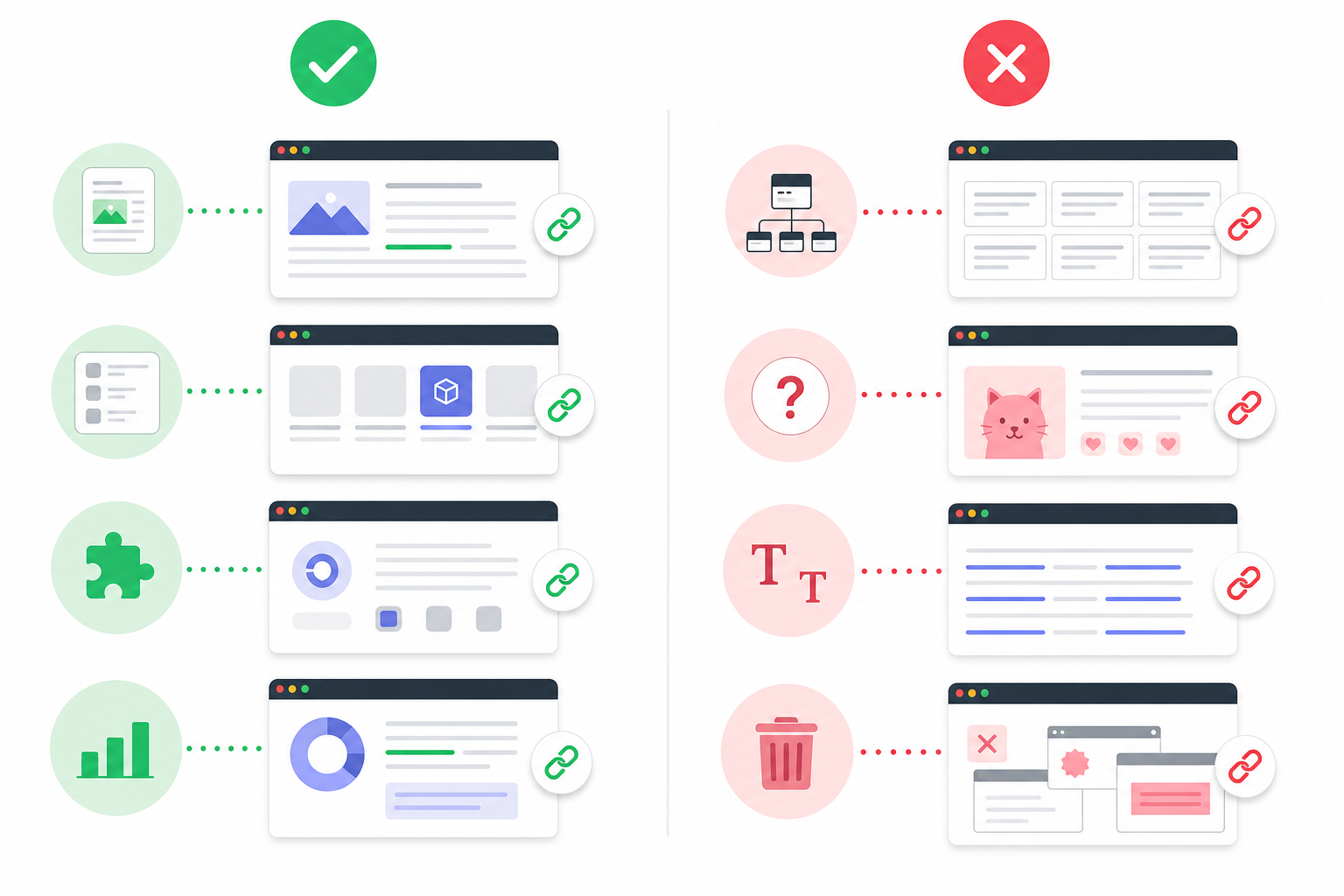
Good Backlinks | Bad Backlinks |
|---|---|
Relevant SaaS or niche industry sites | Irrelevant general sites |
Curated directories with real users | Mass-submission low-quality directories |
Natural branded or contextual anchors | Repetitive exact-match anchors |
Product discovery platforms with engagement | Thin listing pages with no visibility |
Integration partner mentions | Paid link farms |
Editorial roundups and reviews | PBNs and link schemes |
Launch pages with comments and votes | Auto-generated profile pages nobody visits |
Indexable, well-structured pages | Pages that are not indexed or buried |
What link signals influence rankings most in practice
In theory, search engines evaluate hundreds of signals. In practice, SaaS teams should focus on the handful they can influence directly.
Relevance over raw authority
A moderately authoritative link from a trusted SaaS ecosystem source can outperform a more powerful-looking but irrelevant link.
Referring domain diversity
Fifty links from one domain is not the same as fifty links from fifty distinct, relevant domains.
Search engines value independent validation. That is why directory breadth, partner mentions, launch platforms, editorial links, and community references can work together so well.
Natural anchor patterns
Your backlink profile should look like a real brand’s footprint.
Healthy anchor mix often includes:
brand name
product name
URL anchors
partial topical phrases
generic text like “this tool” or “learn more”
If every link says the exact same commercial keyword, that is a red flag.
Link placement context
Where the link appears matters:
inside useful editorial content
on a credible product listing
within a partner resource
on a discoverable launch page
in a well-organized category page
A contextual mention is often stronger than a buried footer or orphaned profile link.
Traffic and engagement quality
In 2026, a backlink that drives actual clicks, exploration, comments, or signups is often more valuable than a “strong” link that no human ever sees.
That is why platforms that combine SEO value with community discovery have such a clear strategic role.
How AI search changes the backlink conversation
AI-assisted search has changed how people discover software, but not the need for trust signals.
Search systems still need reliable sources to draw from. A brand with a stronger footprint across relevant websites, product ecosystems, and editorial mentions is easier to recognize as credible.
That means backlinks increasingly work alongside:
brand mentions
topical authority
structured product information
clear site architecture
community engagement
consistent visibility across trusted platforms
In other words, backlinks are no longer a standalone trick. They are part of a broader digital trust layer.
For SaaS founders, that is good news. It means the best backlink strategy is also often the best visibility strategy.
"Position 1 in Google's organic results earns an average click-through rate of 39.8%." - Source
Ranking gains still matter enormously. And backlinks remain one of the most reliable levers for moving important pages closer to those top positions.
A realistic backlink framework for early-stage SaaS teams
Most early-stage teams do not need a giant outreach machine. They need a focused system.
Phase 1: Build your foundational visibility
Start with sources that are achievable and relevant:
your main website pages
product discovery platforms
curated SaaS directories
founder profiles
launch pages
partner and integration listings
review platforms
This creates the first layer of trust and discoverability.
Phase 2: Strengthen commercial intent pages
Next, support pages like:
alternatives pages
comparison pages
feature pages
use-case pages
pricing-adjacent pages
These pages often drive the best conversion value once they rank.
Phase 3: Add authority assets
Create one or two standout resources:
benchmark studies
calculators
original surveys
templates
glossary hubs
These assets give you something stronger to pitch for editorial backlinks.
Phase 4: Expand with systems, not random outreach
Once your product and brand have more presence, use:
unlinked mention reclamation
partner co-marketing
editorial contributions
strategic directory expansion
done-for-you submission workflows
This is where a platform and service layer can save enormous time. MarketingDB’s listing model plus its directory submission support can help founders move from random backlink chasing to structured visibility building.
A simple monthly SaaS backlink plan
Here is a practical structure most startup teams can actually maintain.
Week | Focus | Actions |
|---|---|---|
Week 1 | Audit and prioritize | Identify pages that need links most: homepage, product, integrations, comparisons |
Week 2 | Directory and launch visibility | Submit or update listings on trusted discovery and product platforms |
Week 3 | Outreach and partnerships | Reclaim mentions, contact partners, pitch relevant roundups |
Week 4 | Refresh and measure | Update listings, monitor referral traffic, track rankings and indexation |
This plan works especially well when you keep your efforts centered on pages that matter to revenue, not just traffic.
Common mistakes SaaS companies still make
Treating all backlinks as equal
A dofollow link from a relevant discovery platform with real users is not the same as a random profile link on a low-quality site.
Ignoring product discovery channels
Many teams focus only on content outreach and forget that product directories and launch ecosystems can create both backlinks and active buyer exposure.
Over-optimizing anchor text
Trying to force exact-match keyword anchors everywhere creates risk and usually looks unnatural.
Building links only to informational blog posts
Helpful for traffic, but not enough for product-led SEO.
Failing to update listings
An outdated product page, broken screenshots, or stale messaging reduces both trust and conversion. One underappreciated advantage of platforms like MarketingDB is the ability to update your listing as your product changes.
Submitting manually to too many weak directories
Volume is not strategy. Relevance, maintenance quality, and audience fit matter more.
How to evaluate a backlink opportunity quickly
Before spending time on a link source, ask:
Is this site relevant to SaaS, startups, makers, or my niche?
Can search engines crawl and index the page?
Would a real person discover my product here?
Does the page look curated and maintained?
Is the link likely to be contextual or useful?
Could this source send targeted traffic?
Can I update the listing or profile later if needed?
If the answer to most of these is yes, it is probably worth pursuing.
Where MarketingDB fits into a modern SaaS backlink strategy
MarketingDB is not just another listing site. It fits a specific gap many SaaS founders face: the need for a low-noise, builder-friendly place to launch, be discovered, and gain SEO value at the same time.
Here is where it naturally supports a backlink strategy:
Indexed listing value
For founders actively improving organic search visibility, being listed on a clean, crawlable, well-indexed directory still matters. A listing on MarketingDB contributes a permanent, structured page that search engines and answer engines can use to discover your product alongside its category, tags, and pricing context.
Product discovery and targeted traffic
Because the platform is built around product discovery, your listing is not just sitting in a forgotten database. It is available to people actively browsing tools, launches, and solutions.
Community feedback
Votes and comments create a layer of engagement many directories lack. That community input can help refine your positioning while giving potential users more confidence.
Clean indexing pathways
A well-structured directory with clear categorization and sitemap support can help search engines find and revisit listings faster, which is especially useful during product launches and updates.
Ongoing listing control
Being able to revise your product page over time is a major advantage. SaaS products evolve quickly, and your directory presence should evolve too.
Global reach for startup audiences
If your product serves founders, marketers, operators, creators, or tech teams, the visibility benefit extends beyond one geography. Discovery platforms can expose your product to people already primed to try new software.
Done-for-you directory submission
This is one of the most practical benefits for lean teams. MarketingDB’s directory submission service helps founders save time while generating broader exposure, more backlinks, and more consistent launch distribution across relevant platforms.

The real takeaway: backlinks are now part of a broader trust system
The old backlink game was mostly about accumulation.
The 2026 version is about credibility, context, discoverability, and compounding visibility.
For SaaS companies, the best backlinks now come from places that do at least one of these well:
validate your product in context
help buyers discover you
support indexation and crawlability
strengthen commercial pages
create community interaction
send qualified traffic
diversify your brand footprint across trusted web properties
That is why a product launch platform or curated directory can be far more strategic than it first appears.
Conclusion: build backlinks where discovery and trust already happen
If you want SaaS backlinks that actually move rankings in 2026, stop thinking only in terms of “link building” and start thinking in terms of where your product earns trust.
The strongest link profile for a SaaS brand usually includes:
relevant curated directories
launch and discovery platforms
partner and integration mentions
commercial roundups and comparisons
review ecosystems
editorial citations
a few durable linkable assets
MarketingDB is valuable in that mix because it gives you more than a directory entry. It gives you a credible launch surface, a permanent indexed listing, targeted visibility, community-driven engagement, easier discoverability for crawlers and AI tools, and an efficient path to broader directory exposure.
If you are shipping a SaaS product and want a calmer, smarter way to improve discoverability while building meaningful backlink signals, MarketingDB is a strong place to start.
List your product, launch it where builders and marketers are already exploring new tools, and let your backlink strategy support real visibility, not just vanity metrics.
Frequently asked questions
Do backlinks still matter for SEO in 2026?
Yes. Backlinks remain one of the strongest signals of authority, but the emphasis has shifted from raw volume to relevance and context. A handful of links from trusted, topically relevant sites now outperforms hundreds of low-quality ones. For competitive SaaS keywords you still need a credible backlink profile to compete; the difference is that quality and fit matter more than count.
What kind of backlinks should a SaaS company build?
Build links from relevant, indexed sites that your buyers would actually visit — software directories, review platforms, editorial mentions, and well-placed guest posts. Just as importantly, point some of those links at high-intent pages (product, pricing, comparison, and feature pages), not only blog posts. Those commercial pages are the ones that convert, and they're often the hardest to rank without links.
How many backlinks does a SaaS site need to rank?
There's no fixed number — it depends on competition. Low-competition, long-tail keywords can rank with 5 to 10 quality links; moderately competitive terms need 10 to 50; and competitive SaaS, finance, or legal keywords can need 50 to 200 or more. A small set of relevant, authoritative links routinely outranks a large pile of weak ones.
Are directory and launch-platform links good for SaaS SEO?
Yes, when the directory or platform is real, indexed, and relevant. These links add referring-domain diversity from established sites, help search engines discover your pages, and often drive early-adopter traffic and discovery on top of the SEO value. Avoid mass-submission services and abandoned, low-authority sites — those add no value and can hurt.
How fast should I build backlinks without looking spammy?
For a new or small SaaS site, a steady pace of roughly 10 to 30 quality links per month looks natural. A brand-new domain that suddenly gains hundreds of links in a month looks manipulative to Google. Build consistently rather than in one burst, and focus on relevance — natural-looking velocity from legitimate sources is what you want.
Written by
Mohd Anas
Founder of MarketingDB. Helping SaaS founders grow with SEO, backlinks, and smart distribution.
Get your startup discovered.
Submit your product and reach founders, marketers, and early adopters looking for new tools.
Permanent listing · SEO visibility · Newsletter exposure
Listed
AI Startup
Featured
Newsletter
SEO
Indexed
Related guides
More from the blog

Best Job Boards for Tech & Crypto Roles (2026)
Jun 28, 2026 · 6 min read

How to Get Dofollow Backlinks for a New SaaS (2026)
Jun 21, 2026 · 8 min read

Free Directories to Submit Your Startup in 2026 (No-Cost List)
Jun 21, 2026 · 6 min read

How to Get Your SaaS Cited by ChatGPT & AI Search (2026)
Jun 21, 2026 · 6 min read